
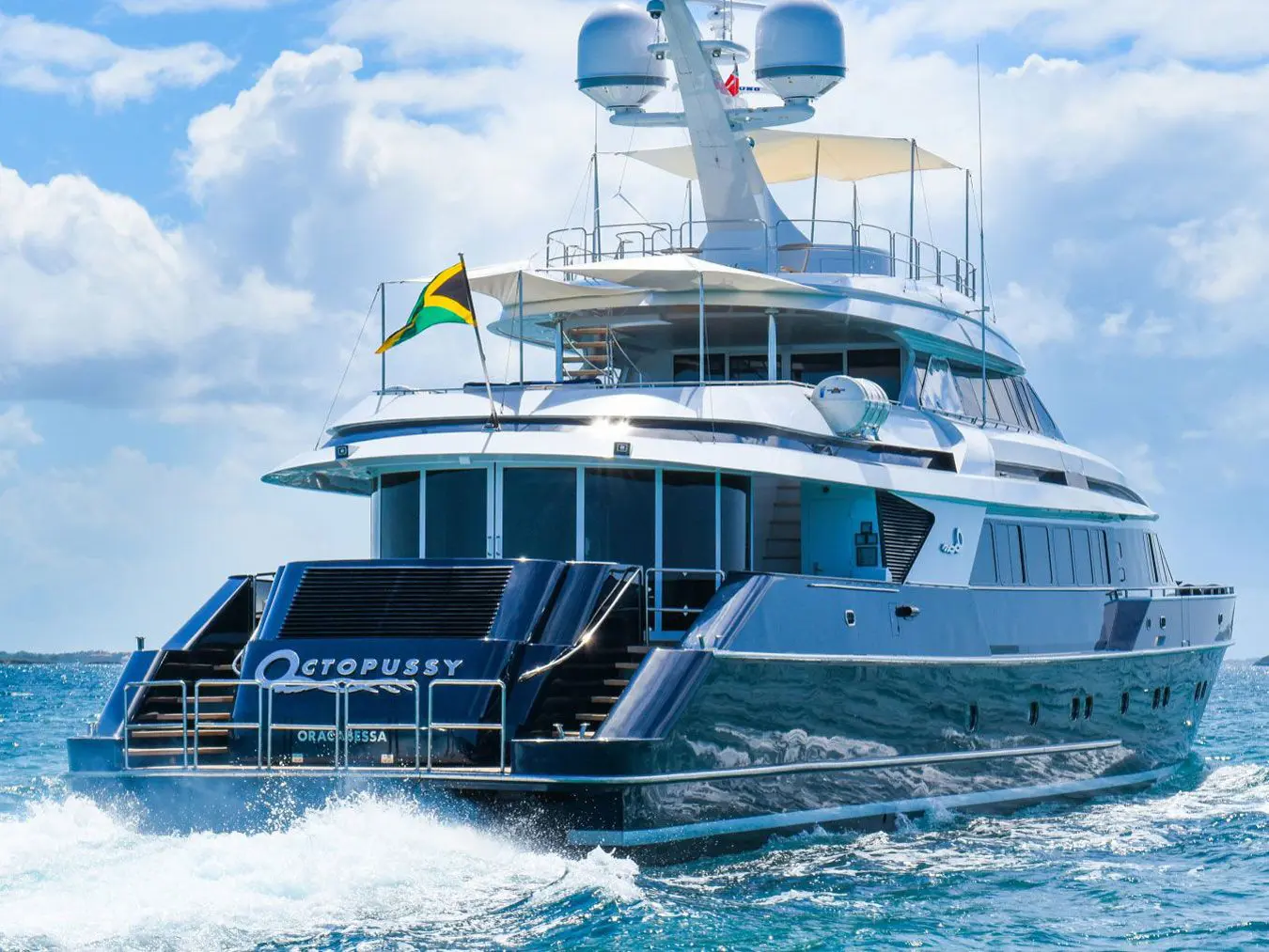
The M/Y Octopussy Project: Introduction
Starboard Yacht Group’s Vision for an Epic Refit
In 2022, Starboard Yacht Group undertook a refit of M/Y Octopussy, the world’s fastest superyacht when she was launched in 1988. In this 7-part blog series, we discuss SYG’s vision for the iconic yacht, which included a sophisticated stabilization package, Voith linear jets, hydrogen-generated hotel power, and a first-of-its-kind hybrid propulsion system for silent, smokeless, hydrogen-powered cruising. Sadly, this epic project never got to see the light of day, but we hope sharing it can inspire other owners, captains, and contractors.
‘The Yacht that Couldn’t Be Built’
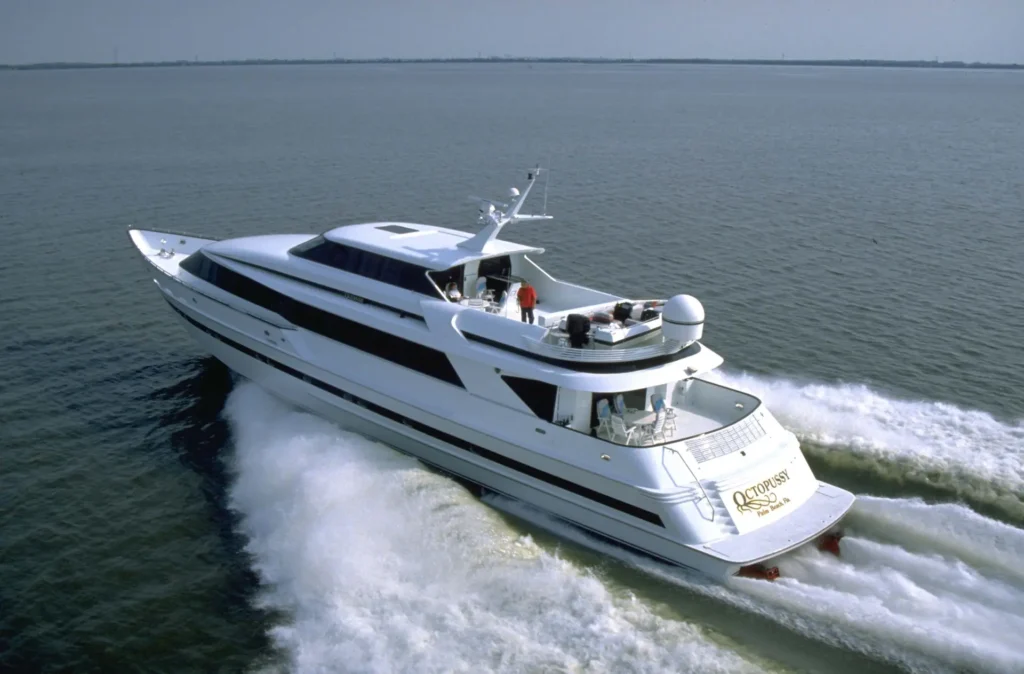
When she arrived in Fort Lauderdale in the summer of 2022 for an extensive refit to be led by Starboard Yacht Group, M/Y Octopussy was a very different yacht than when she was launched in 1988. She was still beautiful, of course, but her once white hull was now dark blue, her overall length had been extended roughly 15 feet, and several interior redesigns had added many tons of displacement.
Envisioned in the mid 1980s by her first owner, John Staluppi, an American entrepreneur known for his love for speed and James Bond films, Octopussy was designed and built from the ground up to be the fastest superyacht in the world. But Staluppi wanted more than just to be the fastest; he wanted a yacht over 100 feet in length that would top 50 knots.

Finding a marine architect and shipyard willing to take on the challenge wasn’t easy — especially because Staluppi wanted it stipulated in the contract that if the finished yacht failed to reach 50 knots, the builder would pay him $100,000 for each knot under 50. If the top speed was less than 48 knots, Staluppi could refuse delivery and pay nothing.
Eventually, though, he found a relatively unknown Dutch builder, Heesen Yachts, that was willing to take on the challenge based on plans from Dutch naval architect Frank Mulder. Weight was kept to a bare minimum throughout, and power was supplied by a trio of massive 3,500 hp MTU diesels driving Kamewa waterjets. On a warm spring day in May 1988, the 130-foot Octopussy hit an unheard of 53.2 knots — more than 60 mph. The story is related in detail in a fascinating half-hour documentary called “The Yacht that Couldn’t Be Built.”
A Turning Point in Superyacht Design
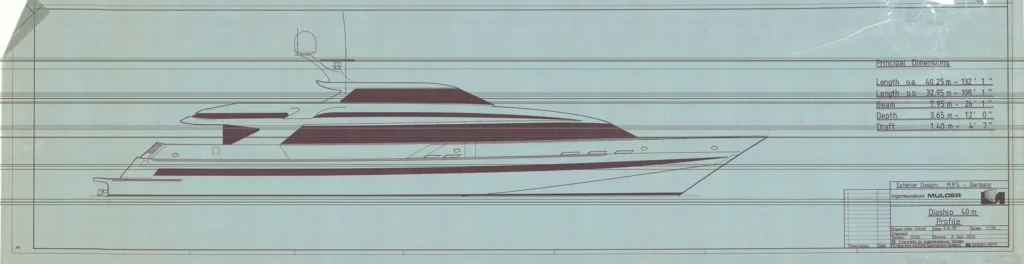
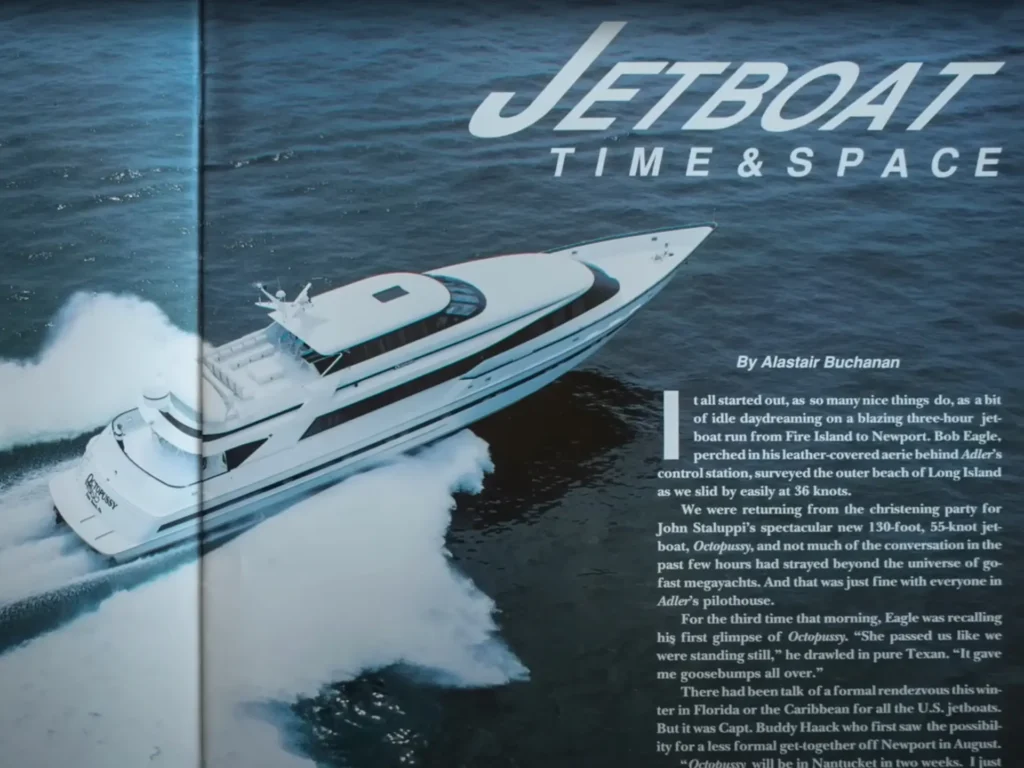
Octopussy was more than just fast, though. Her contemporary lines broke new ground in the superyacht world, which, until then, had been dominated by boxy boats reminiscent of the commercial vessels they had evolved from. “The boat looked fast even when it was sitting at the dock,” recalls BOAT International Editor at Large Marilyn Mower in the documentary. “It just had these great, sleek lines.” Plus, even though the builders had shaved weight wherever possible, Octopussy still had a luxuriously appointed interior.
The result was that, at least in the yachting world, Octopussy did the 1988 equivalent of breaking the internet. The yacht was featured on the cover of virtually every yachting magazine in the world, including the inaugural issue of BOAT International. “There was no question in our minds that Octopussy was the perfect boat for our first cover,” says Mower. “Octopussy was so radical, it was so different, it was so beautiful, and it was so powerful, it made the perfect statement.”
Altogether, it could be argued that Octopussy represented a significant turning point in superyacht design, construction and performance, ushering in the contemporary era.
Fast forward 25 years to Fort Lauderdale, where that same groundbreaking yacht floated on her moorings in June 2022. Over the decades, she had gone through a number of ownership changes and several refits. She was longer, heavier and not nearly as fast, but still beautiful, both inside and out, and now featured an even more striking and luxurious interior design, highlighted by a circular, glass-enclosed aft dining area.
Octopussy in 2022
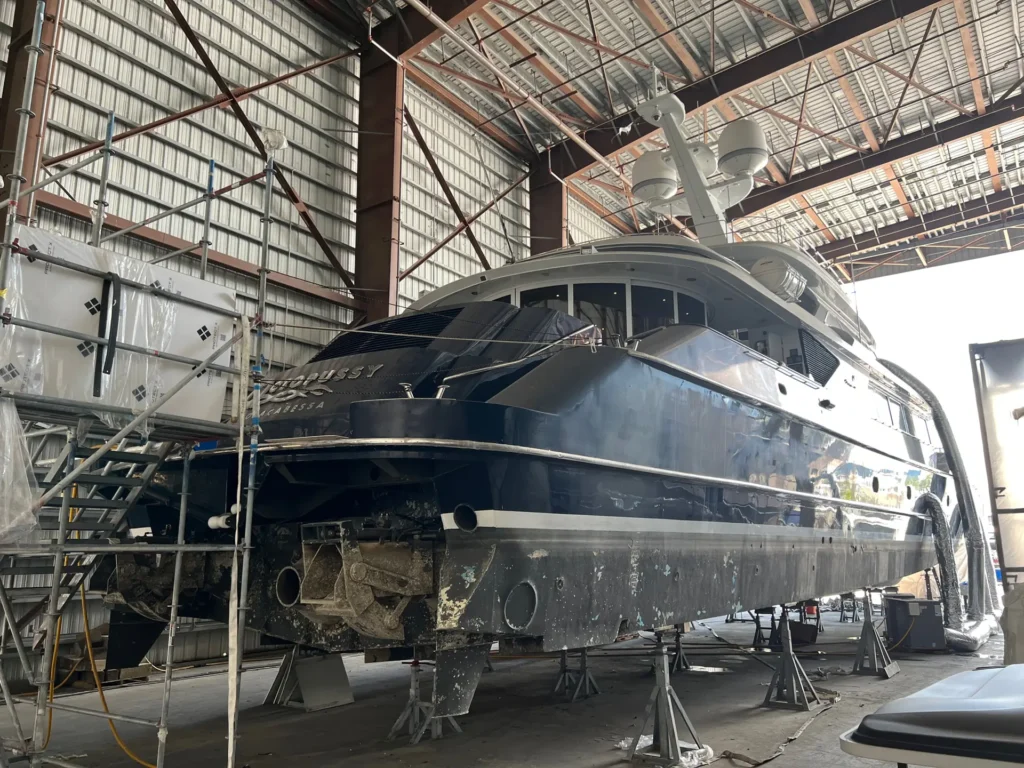
Her new ownership had brought her here to Starboard Yacht Group for another refit that would include a stabilization package and an evaluation of her engines and drives.
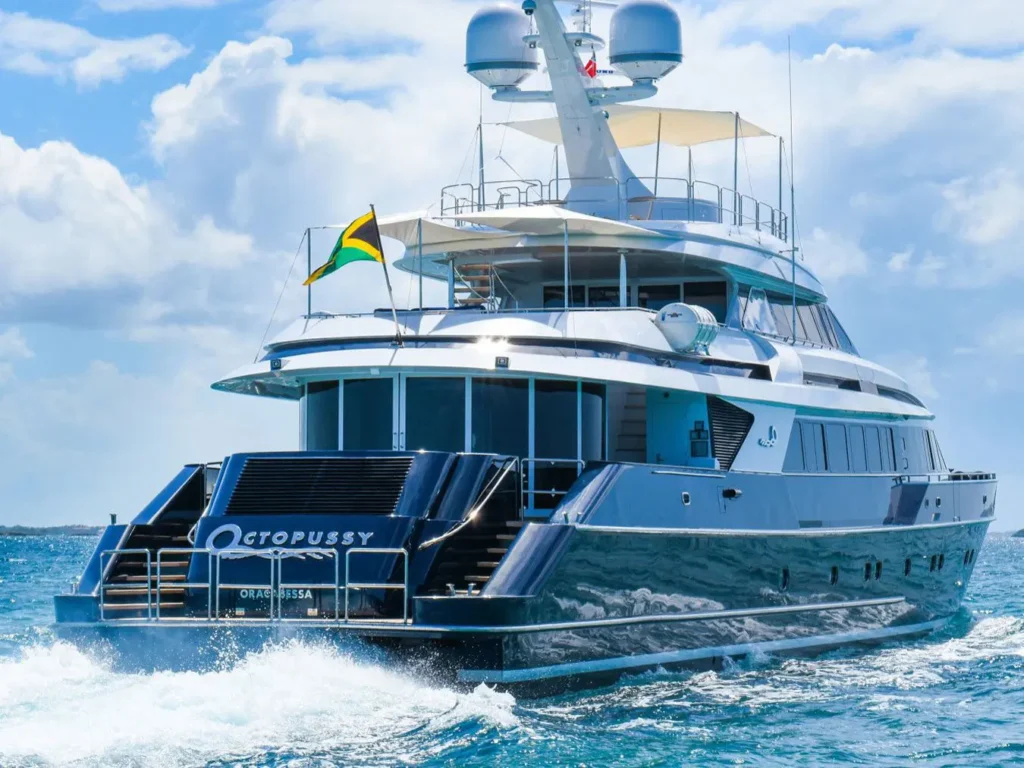
The primary goal was to make her reliable, fast, efficient, and comfortable enough to regularly and safely complete the roughly 1,000 mile voyage between South Florida and the Dominican Republic. Cognizant of Octopussy’s significance as a superyacht icon, Starboard recruited a team of top project managers, designers, and engineers from around the world to plan and execute what they saw as a dream refit.
Sharing the Story
As much of the yachting community already knows, Starboard Yacht Group never had the opportunity to complete that refit. We want to share, though, what we did accomplish during the time we spent working on Octopussy, not just because we’re proud of what we did, but also because we believe our work can potentially be of value to yacht owners, captains, and the yachting industry.
Next up: An Improbable Collaboration: How Octopussy Could Have Made History Again
The singular product of an improbable collaboration between a wealthy American businessman, a gifted marine architect, and a brash young shipyard owner, Octopussy made headlines and history when she reached an amazing 53.17 knots in the spring of 1988. Had Starboard Yacht Group’s planned refit come to fruition, it could have represented, like the original build, an inflection point in the course of yacht design — this time as the first conversion of a yacht to hybrid propulsion, combining conventional diesel power with the option for silent, zero-emission, hydrogen-powered cruising.

